
Assesssment
I utilize a variety of assessments methods in all of the classes that I teach because I strongly believe that student learning is not only measured through a traditional paper and pencil test. As a result, I ensure that all classes that I teach provide students with opportunities to demonstrate their knowledge through formal presentations, debates, multimedia presentations, case study analysis, etc.
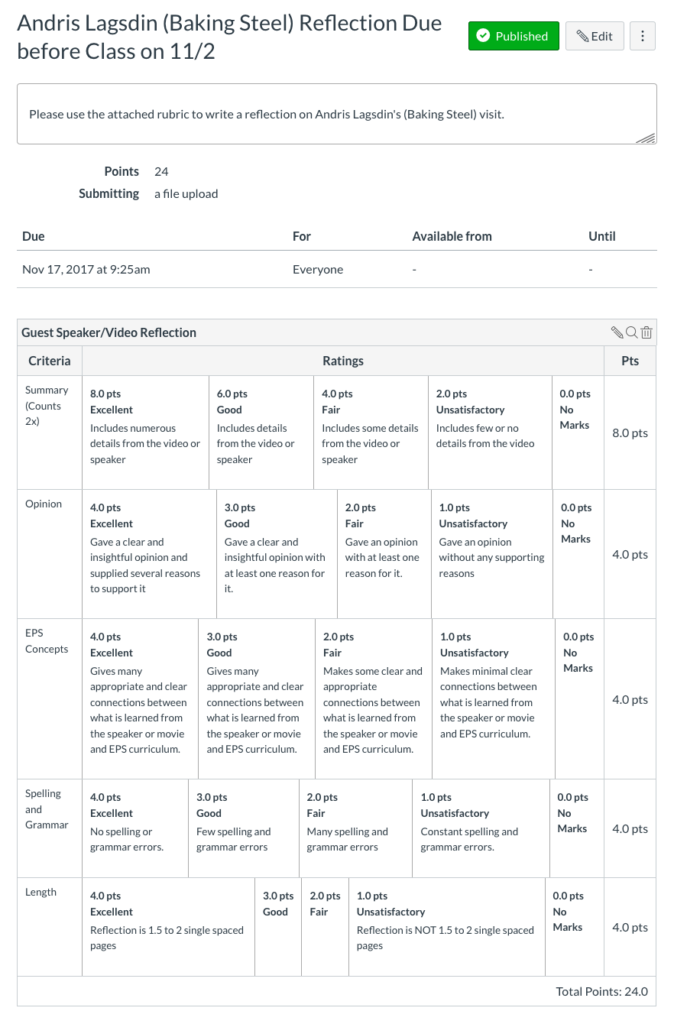
Almost every assignment that I use includes a corresponding rubric because I believe that use of a rubric is beneficial for many reasons. First, providing students with a copy of the rubric when the assignment is explained informs students of exactly how they will be assessed. This information can guide them when completing their assignment because students have access to the expectations for the assignment. As a result, students can theoretically “determine their grade” by simply completing the appropriate expectations listed in the rubric. Second, rubrics help to ensure that my grading is fair and consistent by establishing tangible criteria of expectations for the assignment. Finally, using a rubric for grading gives students tangible feedback. They can see exactly where credit was lost, enabling them to use the feedback to guide them when completing future assignments. Please select the links below to access examples of assignments and student work for all of the courses that I taught during 2019-2020.
EPS 227
For EPS 227, I used several different types of assignments and projects; they are detailed below.
Quizzes:
For this class, I use Pearson’s MYENTREPRENEURSHIP Lab. Each week students take a chapter quiz online pertaining to the chapter that we are covering in class during that week. Mini simulations, which are often done in groups in class are also available.
Entrepreneur Visit Reflections :
Students needed to summary and reflect on the entrepreneurs who visit the course. Some of these presenters include the following:
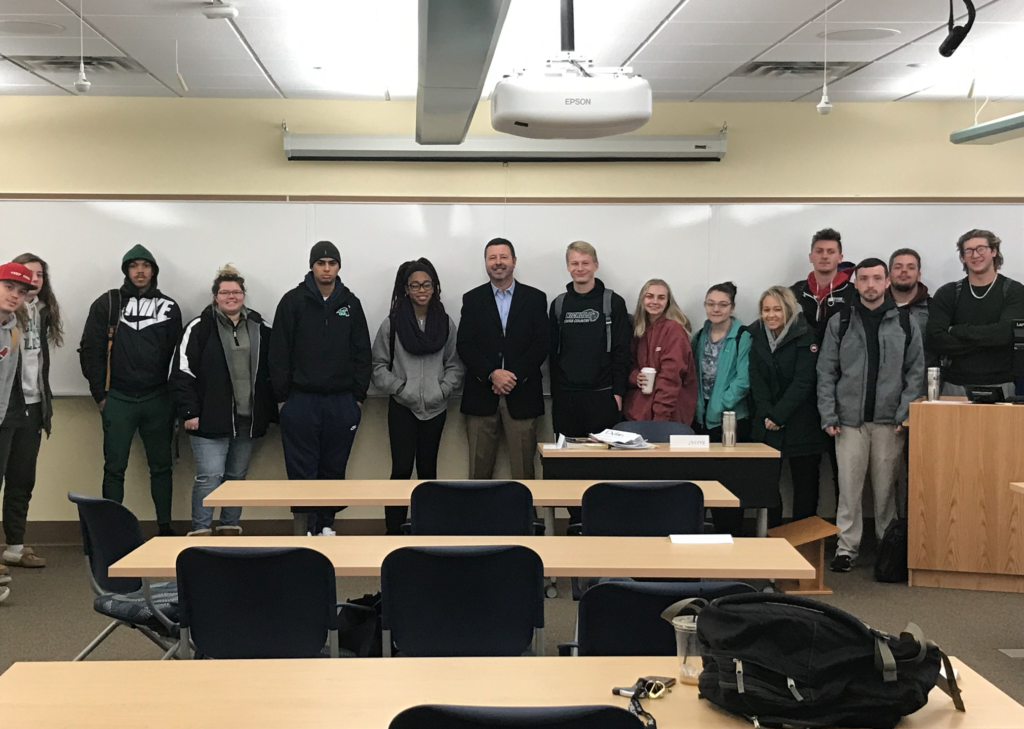
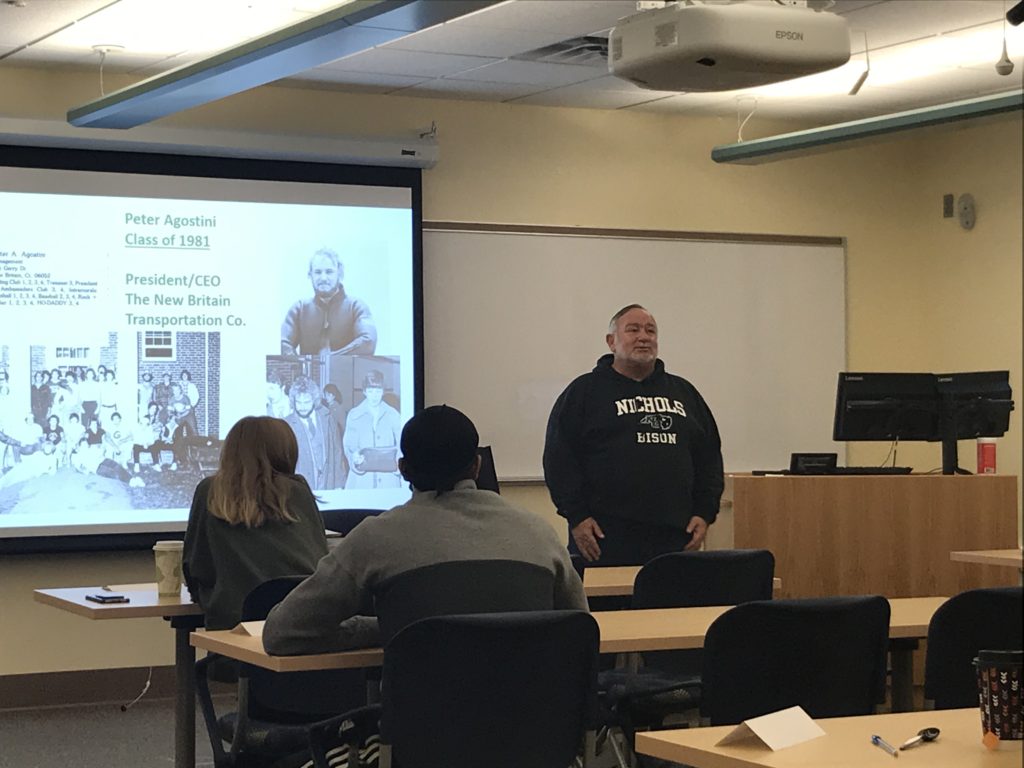
Other assessments include:
EPS 480
The spring of 2019 was the third time that EPS 480, the Entrepreneurship Capstone Course, was offered. I really spent a great deal of time developing the assignments and materials for the course. Overall, I am pleased with the assignments.
Reflections on Guest Speakers
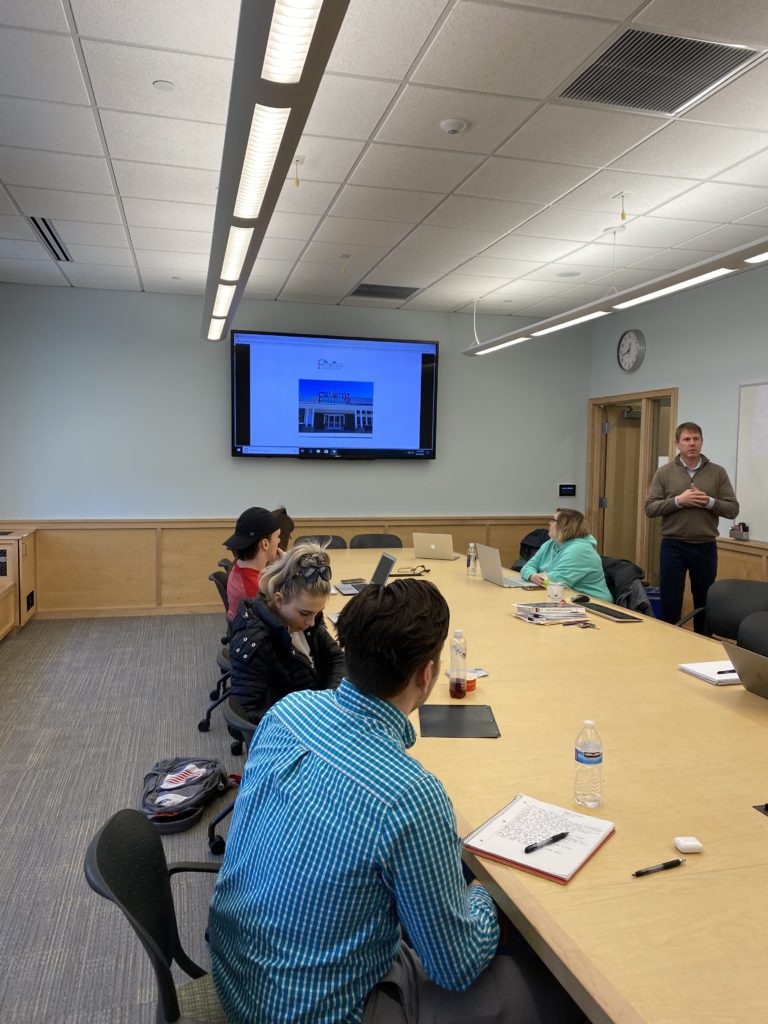
With the help of Brent from Advancement, we had several entrepreneurs visit EPS 480 to share their experiences, share their expertise, and answer questions. After each speaker, each student was required to write a reflection (Reflection Rubric). A sample reflection is below:
Portfolio
Students in EPS 480 were required to complete a comprehensive portfolio to show that they successfully met the outcomes of the program. This portfolio really showcases the scope of learning and experiences in the EPS program. Directions for the portfolio, along with two example portfolios, are included below:
Case Study/Interview
Students were required to interview a small business owner, separate from the business where they were doing their internship. The directions, and some a sample presentation is given below:
Internship
Students were required to complete a 45 hour internship. The internship proposal and supervisor evaluation form that I created are below. Overall, I am impressed by the projects that the students complete. An example of the final internship presentations are also included.
ITM 202
In Advanced Excel, MYITLAB is used. MYITLAB is a teaching and learning platform that is specifically designed by Pearson to house course materials. In other words, MYITLAB contains all of the course materials (Powerpoints, etext, videos, quizzes, etc.). After completing their assignments, students upload their assignments to MYITLAB and get immediate feedback so that they can fix their errors and resubmit if they wish to improve their score. The platform also detects copied files so it is effective at detecting plagerism.
The class also worked on both “practice” exercises to learn and refine skills, along with real-world business cases on both Microsoft Excel and Microsoft Access. For each product, students worked in groups. Each group had to produce several deliverables for each case that included:
- The Excel/Access file (An example of a completed file is attached.)
- A narrated presentation explaining the analysis that the students did, along with their recommendations for the owner.
ITM 209
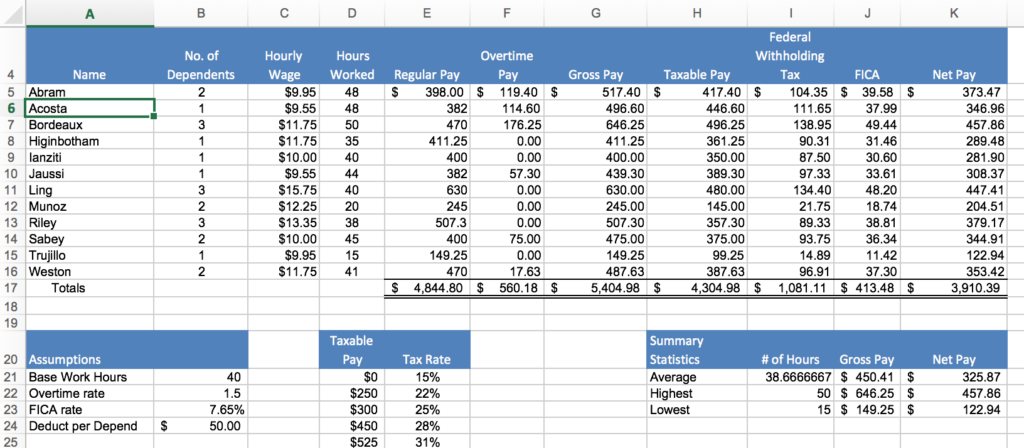
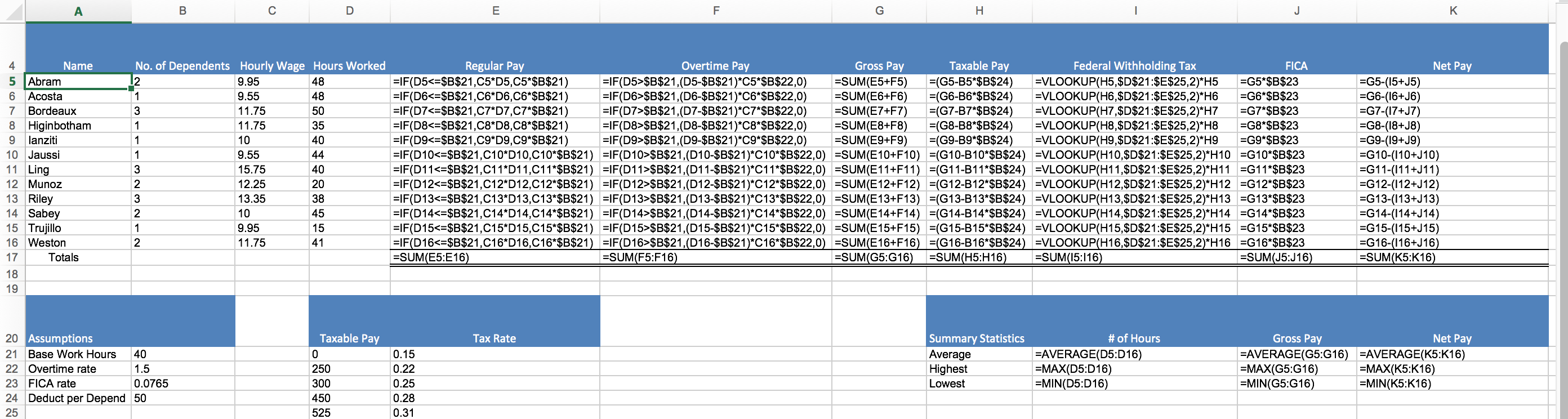
Excel/analytics assignments
Due to the addition of analytics into the course curriculum, I also did several Excel assignments with the class to help them with data analysis. One assignment is shown below.
Google Analytics Project
Students are required to complete the Google Analytics for Beginners course. Upon completion, they are issued a certificate from Google which is good for one year. Students are encouraged to add this credential to their resumes, when applicable.
Case Study
Data Analytics Project
The students were required to use Excel to analyze a fairly large set of data. They were then required to create a presentation where they presented this data. An example is below:
Public Service Announcements
My favorite, “new to my class” project was a Public Service Announcement video assignment that I did in ITM209. It took a lot of preplanning as I had judges and gave away prizes. The project was very well received by the students. Here are a few examples:
MTH 215
Students in my MTH 215 class take four tests, and a final exam.
All homework is completed on WebAssign, the software used in this course.
I give four tests in MTH 215, along with a final exam. All tests are paper and pencil. (Students still prefer them this way.) The cumulative final exam is given in two parts, during the last two class periods. I make three versions of each test to help prevent cheating.
For each test review, I provide a review test, which is very similar to the test, for each test. We also play a review game, which students seem to enjoy based on the feedback on the BLUE evaluations, before each test.
Examples of some of these assessments are given below.
- Review for Test 3
- Test #2-Version A
- Test #2-Version B
- Test #3-Version C
- Final Exam-Version A
- Final Exam-Version B
- Final Exam-Version C
Statistics Projects
In all of my statistics classes, students complete a project that integrates real world data/statistics and also requires the use of Microsoft Excel. The statistics project is a significant portion of the student’s grade, having a value of 20% of their grade. As a result, we spend a significant amount of time working on the project. As you will learn below, I did one statistics project in the fall and a different project in the spring semester.
Fall Statistics Project:
The directions for these projects, along with an example, are listed below.
Spring Statistic Project:
Due to classes migrating to online learning in the Spring of 2020 due to COVID, I changed the stats project that I had students complete during the fall semester. I felt this one would be more relevant, and easy to complete, given the circumstances. A sample of a project is below:
Team Based Learning Classroom
I was fortunate enough to be able to teach some of my classes in the team-based learning classroom in the AB.
Meeting in the classroom allowed me to do more team based, technology infused activities in class. For instance, I was able to create Padlets like this one or shared Google presentations like this one.

Utilization of Technology
Utilization of technology is one of my strongest areas. In Section D, I showcased projects that I use in the classroom. All of them utilize technology. In addition, some of the ways that I used technology included:
- Using Canvas for descriptions and submissions of all class assignments in all courses
- Using Canvas to post slides and videos for each course so that student’s can always access important course information.
- Using Canvas for all course grading
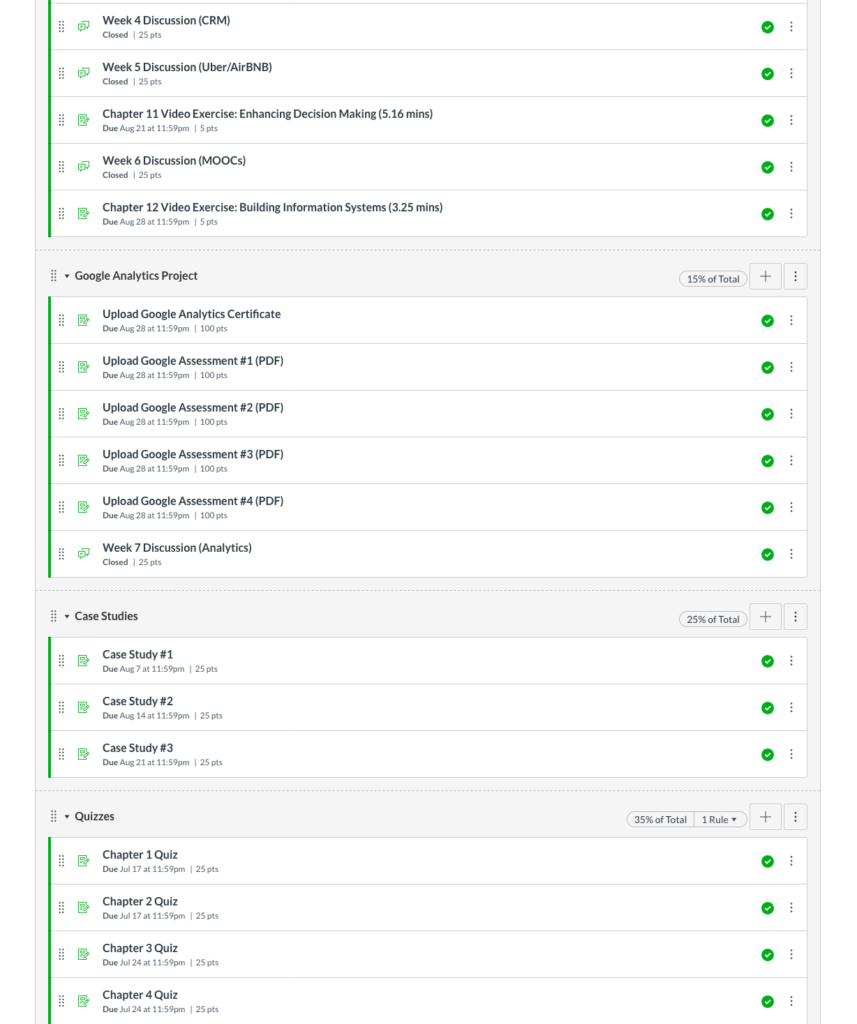
- Using Canvas for course attendance
- Using rubrics for all assignments
- Using Turnitin for all case study and paper submissions
- Using Webassign for math homework
- Using PowerPoint, websites, and YouTube videos in all courses
- Using Canvas for quizzes and exams in ITM209 and EPS227
- Using email to correspond with students
- Assisting other faculty with Canvas issues
- Using MYITLAB in Advanced Excel
- Using MyEntrepreneurshipLab in EPS227

- Assisting other faculty with Turnitin issues
- Using WordPress for the creation of my faculty e-portfolio
- Assisting other faculty members with the creation of their faculty e-portfolio
- Using shared documents on Google Drive in all classes to collaboratively edit documents
Guest Speakers
As mentioned in another section, guest speakers are a big component of my entrepreneurship classes.
Office Hours
I am available during my office hours, and for many hours in addition to my office hours, to help students.
As ITM 202 and MTH 215 are considered challenging classes, I generally have a lot of “student visitors” during my office hours. (Overseeing the spring EPS 480 internships is also time consuming.)
Attendance Policy
My attendance policy can be found on my syllabi in the Pedagogy: Planning section.